Kenya · Safari
Samburu National Reserve
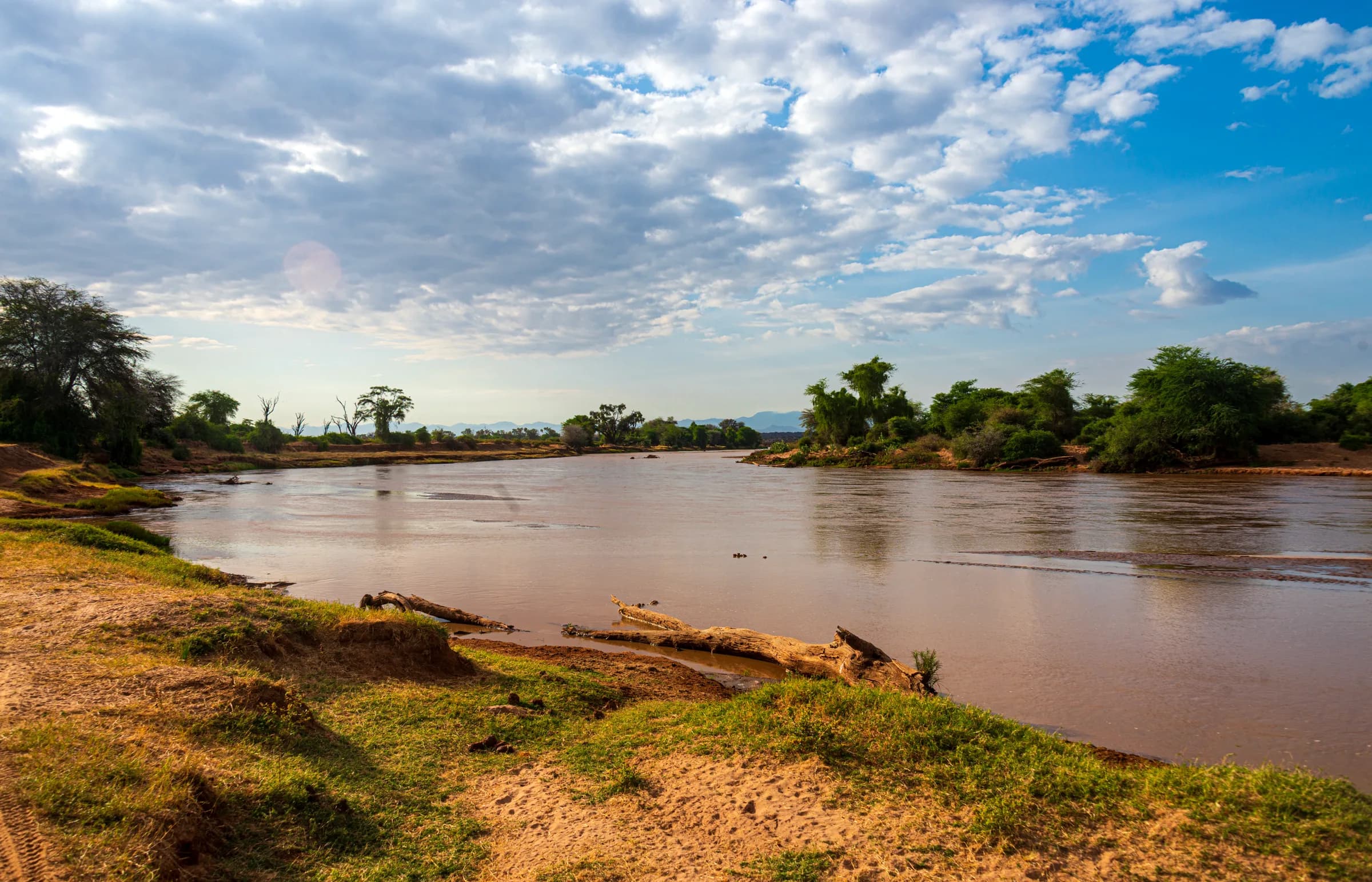
Photo: Daniel Case / Wikimedia Commons, CC BY-SA 4.0
- Properties
- 11
- Luxury
- 6
- Mid-range
- 5
Overview
Samburu National Reserve is Kenya's wild north, a rugged, sun-baked wilderness along the Ewaso Ng'iro River that flows through dramatic semi-arid terrain unlike anywhere else in the country. At 165 km², Samburu is relatively compact but exceptional in its wildlife diversity, offering species found nowhere else in Kenya.
The reserve is famous for its 'Special Five', species unique to this northern ecosystem: the reticulated giraffe (the most beautiful of all giraffe subspecies, with bold geometric patterning), Grevy's zebra (the world's most endangered zebra, with narrow stripes and large rounded ears), Beisa oryx, Somali ostrich, and the gerenuk, an elegant long-necked antelope that stands on its hind legs to browse.
The Ewaso Ng'iro River acts as a lifeline for the reserve, drawing elephants, lions, leopards, crocodiles, and hippos to its banks. Leopards are particularly well habituated in Samburu and among the most reliably spotted in all of Kenya. The doum palm-fringed riverbanks create a quintessentially northern landscape of great photographic beauty.
Samburu is most often combined with a Maasai Mara or Laikipia safari to create a compelling north-south Kenya itinerary showcasing the remarkable diversity of Kenyan ecosystems.
When to go
Dry SeasonsJan to Feb, Jun to Oct
Green SeasonMar to May, Nov
- This month
- Year-Round
- Samburu's permanent river ensures wildlife viewing throughout the year.
- Dry Seasons
- Best game viewing. Animals concentrate along the Ewaso Ng'iro River. Hot but excellent visibility. Peak Big Cat sightings.
- Green Season
- Fewer tourists, lush landscapes, exceptional birding including many Palearctic migrants. Some tracks can become muddy after heavy rains.
Park fees
| Category | Non-resident | EA citizen | EA resident |
|---|---|---|---|
| Adult | USD 85 / 24hrs | KES 1,200 | KES 1,620 |
| Child, 5 to 17 | USD 50 / 24hrs | KES 600 | KES 810 |
| Under 5 | Free | Free | Free |
County-managed (NOT KWS). Cash USD or M-Pesa at gate. Fees subject to change without KWS notice, always confirm with operator before travel. East African residents qualify for reduced rates with valid ID.
Park fees are not included in accommodation rates and are added at quotation stage. Effective October 2025, reverified annually.
Samburu National Reserve in pictures
Where you'll stay
Luxury · 6
- Photos to come
Soroi Samburu Lodge
A Soroi Collection lodge in the Samburu National Reserve area, with standard rooms, superior/family rooms and an executive villa, priced on full board and ground-package bases. Full description and photography pending.
Full boardLodge
Luxury - Photos to come
Elephant Bedroom Camp
Tucked into riparian forest on the banks of the Ewaso Ng'iro River, 12 spacious tents with private verandas overlooking the river where elephants drink throughout the day. Run by Atua Enkop ('from the earth of Africa') with a genuine spirit of authenticity. Known for exceptional, deeply knowledgeable guiding and an intimate river-camp atmosphere. The forest setting provides dramatic contrast with the semi-arid plains and outstanding birding alongside the Samburu Special Five.
Full boardLuxury Tented Camp
Luxury - Photos to come
Elewana Loisaba Lodo Springs
An ultra-private Elewana Collection property on the vast Loisaba Conservancy in Laikipia, 8 tented rooms perched on a hilltop with 360-degree views stretching to Mount Kenya. Each room has a personal Guest Ambassador providing butler-level service in a conservancy that protects lions, Grevy's zebra, wild dog, and elephant on a landscape scale. The famous Loisaba Star Beds, hand-carved wooden beds on wheels rolled onto open platforms for sleeping under the stars, are an extraordinary add-on available to guests.
Full boardLuxury Tented Camp
Luxury - Photos to come
Larsens Camp
The most established luxury camp inside the reserve, 20 sturdy tented rooms in a lush grove of acacia and fig trees on the riverbank, refreshed by river breezes and the sounds of birdsong and river wildlife. Operated by Sanctuary Retreats and known for an engaging, genuinely warm team of long-serving staff. The camp's proximity to the river's productive wildlife zone makes it an excellent base for morning and evening game drives into one of Kenya's most reliable wildlife reserves. Particularly good for families.
Full boardLuxury Tented Camp
Luxury - Photos to come
Saruni Samburu
One of the most dramatically positioned lodges in Kenya, 6 open-fronted villas on a rocky clifftop in the exclusive Kalama Conservancy with panoramic views stretching across the semi-arid northern landscape that feel impossibly vast. An infinity pool appears to pour off the edge of the world. Known for extraordinary personalised service, exclusive game drives in the conservancy, and warrior-led walking safaris with Samburu guides. Consistently rated by operators as the finest lodge in northern Kenya. Not for travellers who want conventional safari proximity, this is about landscape and exclusivity.
Full boardBoutique Lodge
Luxury - Photos to come
Sasaab
The most architecturally striking camp in northern Kenya, Moroccan-inspired whitewashed architecture perched on a ridge above the Ewaso Ng'iro River with each of the 9 suites exceeding 100 square metres and featuring a private plunge pool and a four-poster bed positioned for maximum landscape drama. The views from Sasaab's ridge at sunrise, stretching across the Laikipia Plateau toward Mount Kenya, are among the finest in East Africa. Camel safaris, helicopter excursions, and an award-winning spa complement exceptional game drives into the reserve.
Full boardLuxury Lodge
Luxury
Show all 6 luxury staysShow fewer
- Photos to come
Elewana Loisaba Lodo Springs
An ultra-private Elewana Collection property on the vast Loisaba Conservancy in Laikipia, 8 tented rooms perched on a hilltop with 360-degree views stretching to Mount Kenya. Each room has a personal Guest Ambassador providing butler-level service in a conservancy that protects lions, Grevy's zebra, wild dog, and elephant on a landscape scale. The famous Loisaba Star Beds, hand-carved wooden beds on wheels rolled onto open platforms for sleeping under the stars, are an extraordinary add-on available to guests.
Full boardLuxury Tented Camp
Luxury - Photos to come
Larsens Camp
The most established luxury camp inside the reserve, 20 sturdy tented rooms in a lush grove of acacia and fig trees on the riverbank, refreshed by river breezes and the sounds of birdsong and river wildlife. Operated by Sanctuary Retreats and known for an engaging, genuinely warm team of long-serving staff. The camp's proximity to the river's productive wildlife zone makes it an excellent base for morning and evening game drives into one of Kenya's most reliable wildlife reserves. Particularly good for families.
Full boardLuxury Tented Camp
Luxury - Photos to come
Saruni Samburu
One of the most dramatically positioned lodges in Kenya, 6 open-fronted villas on a rocky clifftop in the exclusive Kalama Conservancy with panoramic views stretching across the semi-arid northern landscape that feel impossibly vast. An infinity pool appears to pour off the edge of the world. Known for extraordinary personalised service, exclusive game drives in the conservancy, and warrior-led walking safaris with Samburu guides. Consistently rated by operators as the finest lodge in northern Kenya. Not for travellers who want conventional safari proximity, this is about landscape and exclusivity.
Full boardBoutique Lodge
Luxury - Photos to come
Sasaab
The most architecturally striking camp in northern Kenya, Moroccan-inspired whitewashed architecture perched on a ridge above the Ewaso Ng'iro River with each of the 9 suites exceeding 100 square metres and featuring a private plunge pool and a four-poster bed positioned for maximum landscape drama. The views from Sasaab's ridge at sunrise, stretching across the Laikipia Plateau toward Mount Kenya, are among the finest in East Africa. Camel safaris, helicopter excursions, and an award-winning spa complement exceptional game drives into the reserve.
Full boardLuxury Lodge
Luxury
Mid-range · 5
- Photos to come
Sarova Shaba Game Lodge
A Sarova Hotels ground-package lodge in the Shaba National Reserve area (Samburu ecosystem), priced the same way as its sister property Sarova Mara Game Camp. Full description and photography pending.
Full boardLodge
Mid-range - Photos to come
Ashnil Samburu Camp
A compact midrange camp inside the reserve with 30 tents on raised platforms offering nearly 360-degree views from each private veranda. The Ashnil brand is known for clean, comfortable tented accommodation at accessible prices with honest, professional service. The river proximity means wildlife sightings from camp are common. A reliable choice for travellers who want to be inside the reserve at a midrange price point with the comfort of en-suite facilities.
Full boardTented Camp
Mid-range - Photos to come
Samburu Game Lodge
The oldest lodge in Samburu, a historic property that has welcomed guests since the 1960s, set directly on the Ewaso Ng'iro River with crocodiles and elephants visible from the dining terrace. A larger, hotel-scale operation known for its colonial atmosphere, reliable service, and very direct wildlife access from the grounds. The river-facing rooms and waterside dining are the highlights. An honest, well-priced midrange option for travellers who value history and location over design-led accommodation.
Full boardPermanent Lodge
Mid-range - Photos to come
Samburu Intrepids Camp
The leading midrange-to-luxury tented camp inside the reserve, 30 spacious en-suite tents on the riverbank with an infinity pool with scenic views and a social, well-run camp atmosphere. Part of the Heritage Hotels group and known for good food, reliable service, and an excellent programme of game drives. Particularly popular with families for its balance of comfort and river-camp authenticity. The riverside location means elephants, crocodiles, and hippos are visible from the pool terrace.
Full boardLuxury Tented Camp
Mid-range - Photos to come
Samburu Sopa Lodge
A well-established lodge inside the reserve on elevated ground with good views across the surrounding landscape, 67 rooms in the dependable Sopa Hotels formula of comfortable, clean accommodation with good food and reliable service. Known for value-for-money packages and efficient operations. Well-suited to groups and organised tours. The elevated position provides pleasant communal areas with park views and a pool terrace that catches the evening breeze.
Full boardPermanent Lodge
Mid-range
Show all 5 mid-range staysShow fewer
- Photos to come
Samburu Game Lodge
The oldest lodge in Samburu, a historic property that has welcomed guests since the 1960s, set directly on the Ewaso Ng'iro River with crocodiles and elephants visible from the dining terrace. A larger, hotel-scale operation known for its colonial atmosphere, reliable service, and very direct wildlife access from the grounds. The river-facing rooms and waterside dining are the highlights. An honest, well-priced midrange option for travellers who value history and location over design-led accommodation.
Full boardPermanent Lodge
Mid-range - Photos to come
Samburu Intrepids Camp
The leading midrange-to-luxury tented camp inside the reserve, 30 spacious en-suite tents on the riverbank with an infinity pool with scenic views and a social, well-run camp atmosphere. Part of the Heritage Hotels group and known for good food, reliable service, and an excellent programme of game drives. Particularly popular with families for its balance of comfort and river-camp authenticity. The riverside location means elephants, crocodiles, and hippos are visible from the pool terrace.
Full boardLuxury Tented Camp
Mid-range - Photos to come
Samburu Sopa Lodge
A well-established lodge inside the reserve on elevated ground with good views across the surrounding landscape, 67 rooms in the dependable Sopa Hotels formula of comfortable, clean accommodation with good food and reliable service. Known for value-for-money packages and efficient operations. Well-suited to groups and organised tours. The elevated position provides pleasant communal areas with park views and a pool terrace that catches the evening breeze.
Full boardPermanent Lodge
Mid-range
You might also like
Frequently asked questions
Anything not answered here, a consultant answers directly. More planning questions are on the FAQ page.
Best game viewing. Animals concentrate along the Ewaso Ng'iro River. Hot but excellent visibility. Peak Big Cat sightings.
County-managed (NOT KWS). Cash USD or M-Pesa at gate. Fees subject to change without KWS notice, always confirm with operator before travel. East African residents qualify for reduced rates with valid ID.
Samburu National Reserve is Kenya's wild north, a rugged, sun-baked wilderness along the Ewaso Ng'iro River that flows through dramatic semi-arid terrain unlike anywhere else in the country. At 165 km², Samburu is relatively compact but exceptional in its wildlife diversity, offering species found nowhere else in Kenya.